
.png/:/cr=t:0%25,l:0%25,w:100%25,h:100%25/rs=w:1209,cg:true)
Best Vision Support & Eye Health Supplements for Adults Over 55"
Science Genics
Vision Support follows a two-step protocol, each built around a different mechanism behind age-related vision changes. Step 1 focuses on macular pigment and antioxidant protection — the eye's tissue-level defense system. Step 2 focuses on optic nerve signaling and digital eye strain — the pathway carrying visual information to the brain. Together, they address two distinct parts of how vision actually works; on its own, each is a complete formula built around its specific focus.
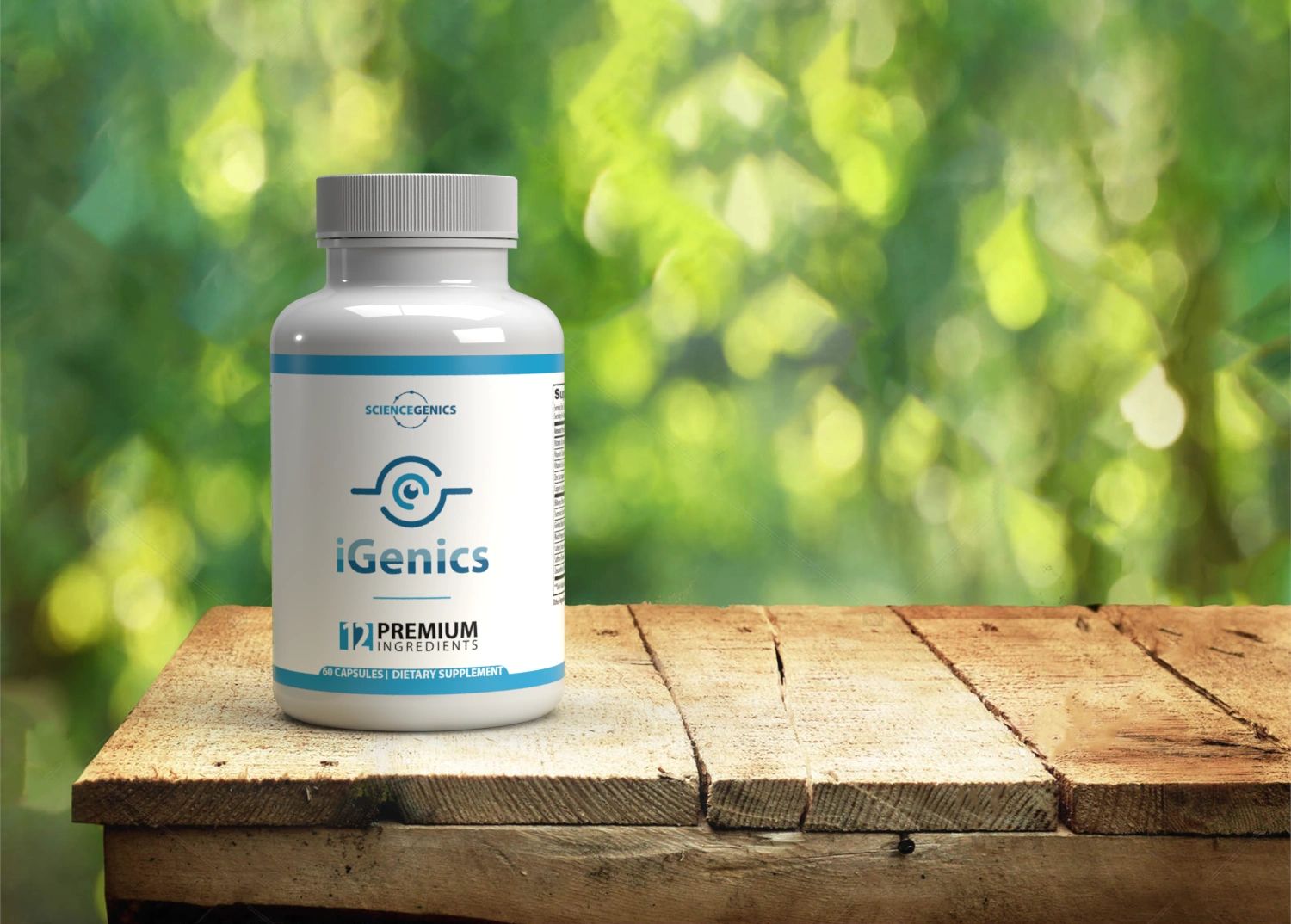
STEP 1: THE SHIELD — iGenics
The Macular Reserve: What the Research Actually Says About Feeding Your Eyes After 55
Your eyes are working harder than any generation before them. Decades of sunlight exposure, hours of screen time, and the ordinary wear of aging all place a steady demand on a small, dense patch of tissue at the back of your eye called the macula — the part responsible for the sharp, central vision you use to read, recognize faces, and drive. Protecting it isn't about a miracle fix. It's about giving your body the raw materials it needs to defend tissue that takes a lifetime of stress.
The macula's built-in shield — and why it thins with age
Your macula contains its own natural antioxidant layer, made of two plant pigments called lutein and zeaxanthin. Think of them as internal sunglasses: they absorb high-energy blue light before it reaches the light-sensitive cells behind them, and they neutralize free radicals — unstable molecules produced by normal metabolism and light exposure that damage cells over time. The problem is that your body cannot produce lutein or zeaxanthin on its own. They come entirely from diet, and dietary intake tends to decline with age, right when the demand for antioxidant protection is rising.
What a major federally funded trial found — and what it didn't
The most rigorous research on this comes from the Age-Related Eye Disease Study 2 (AREDS2), a five-year randomized clinical trial funded by the National Eye Institute, part of the NIH. It's worth being precise about the result: the AREDS2 randomized clinical trial published in JAMA found that adding lutein and zeaxanthin to the original AREDS formula did not, across the full study group, produce a statistically significant reduction in progression to advanced disease. But two secondary findings are genuinely useful. Participants with the lowest dietary intake of lutein and zeaxanthin saw about a 25% lower relative risk when supplementing, compared to similar participants who didn't. And formulas using lutein/zeaxanthin instead of beta-carotene (the original AREDS ingredient) avoided beta-carotene's known increased lung cancer risk in smokers and former smokers — making it the safer substitute the field has since adopted.
The supporting botanical layer
Beyond the AREDS2 core (lutein, zeaxanthin, vitamin C, vitamin E, zinc, and copper), formulas like iGenics add bilberry, Ginkgo biloba, saffron, and turmeric extract. Here it's worth being honest rather than promotional: a systematic review of placebo-controlled bilberry trials found the evidence for improving night vision in people with normal eyesight was largely negative in the most rigorous studies, though a separate Japanese trial found bilberry reduced eye strain and fatigue in heavy screen users — a more modest but real benefit. Ginkgo biloba and saffron both have documented antioxidant and anti-inflammatory activity in broader research, though the evidence specific to human vision outcomes is earlier-stage. Turmeric's active compound, curcumin, is one of the most studied anti-inflammatory plant compounds available, though most of that evidence is general, not eye-specific.
A genuinely well-supported detail: absorption
One formulation choice does have strong, specific backing. Curcumin (from turmeric) is poorly absorbed on its own. A landmark 1998 study in Planta Medica found that just 20mg of piperine — the active compound in black pepper extract — increased curcumin's bioavailability in human subjects by roughly 2,000%. Including black pepper extract alongside turmeric isn't a filler ingredient; it's the mechanism that makes the turmeric usable at all.
What this means practically
None of this is a cure, and no supplement — this one included — reverses vision that's already changed. What the research supports is narrower and more honest: giving your eyes the antioxidant nutrients they're no longer getting enough of from diet alone, at doses that match what's actually been studied, may help support the macula's existing defenses against age-related oxidative stress. That's the frame iGenics is built around — the AREDS2-modeled core, plus a supporting botanical layer, with black pepper extract included specifically to make the turmeric component absorbable.
Deep Dive: Read more about Igenics
"Disclosure: As an affiliate, Elated Gleam may earn a commission from qualifying purchases made through links on this page without extra cost to customers. As with any wellness product, individual results may vary. These statements have not been evaluated by the Food and Drug Administration, and this product is not intended to diagnose, treat, cure, or prevent any disease. Consult your physician before starting any new supplement, particularly if you have an existing eye condition or take prescription medication."

Advanced Vision Formula
Advanced Bionutritionals
STEP 2: THE SIGNAL — ADVANCED VISION FORMULA
Focus: Optic Nerve Signaling & Digital Eye Strain Recovery
Clear eyesight depends on more than the health of the eye itself — it also depends on the signal traveling from the eye to the brain along the optic nerve. That signaling pathway can weaken with age, oxidative stress, and the sustained close-focus strain of screen time. Advanced Vision Formula is built around supporting this specific mechanism: nerve signaling and digital eye strain, rather than macular pigment.
The Formula — What Each Ingredient Does
Citicoline — A compound your brain and nervous system already use to build and repair neural membranes. In clinical research, oral citicoline has been shown to improve neural conduction along the visual pathway and support retinal ganglion cell function in patients with glaucoma and other optic nerve conditions — not by lowering eye pressure, but thr\ough a direct, measurable effect on the nerve itself.
Ginkgo Biloba — Included for its documented, if modest, effect on ocular blood flow with sustained use.
Beta Glucan — A polysaccharide that slows the absorption of high-glycemic carbohydrates, supporting steadier blood sugar, which reduces added stress on the small blood vessels feeding the retina.
Taurine — The most abundant amino acid in retinal tissue. Research on taurine deficiency shows it directly damages photoreceptors and retinal ganglion cells; taurine supplementation supports the retina's baseline structural maintenance.
N-Acetyl-L-Cysteine (NAC), Vitamin C, Zinc, Bilberry, and Grape Seed Extract — A layered antioxidant group supporting the eye's natural defense against oxidative stress, with bilberry specifically studied for reducing digital eye strain in heavy screen users.
Who This Is For
Adults over 55 who notice eye fatigue, dryness, or tiredness after screen use, or reduced confidence driving at night.
Deep Dive: Read in Detail about Advanced Vision Formula
Secure Supply of Advanced Vision Formula via Digistore24
Disclosure: As an affiliate, Elated Gleam may earn a commission from qualifying purchases made through links on this page. Consult your physician before starting any new supplement, particularly if you have an existing eye condition or take prescription medication.
Resource Center
The Real Cause of Cataracts: What's Actually Happening Inside Your Eye's Lens After 55
Digital Eye Strain After 55: Why Screens Hit Older Eyes Harder
"Disclosure: As an affiliate, Elated Gleam may earn a commission from qualifying purchases made through links on this page without extra cost to customers. As with any wellness product, individual results may vary. These statements have not been evaluated by the Food and Drug Administration, and this product is not intended to diagnose, treat, cure, or prevent any disease. Consult your physician before starting any new supplement, particularly if you have an existing eye condition or take prescription medication."